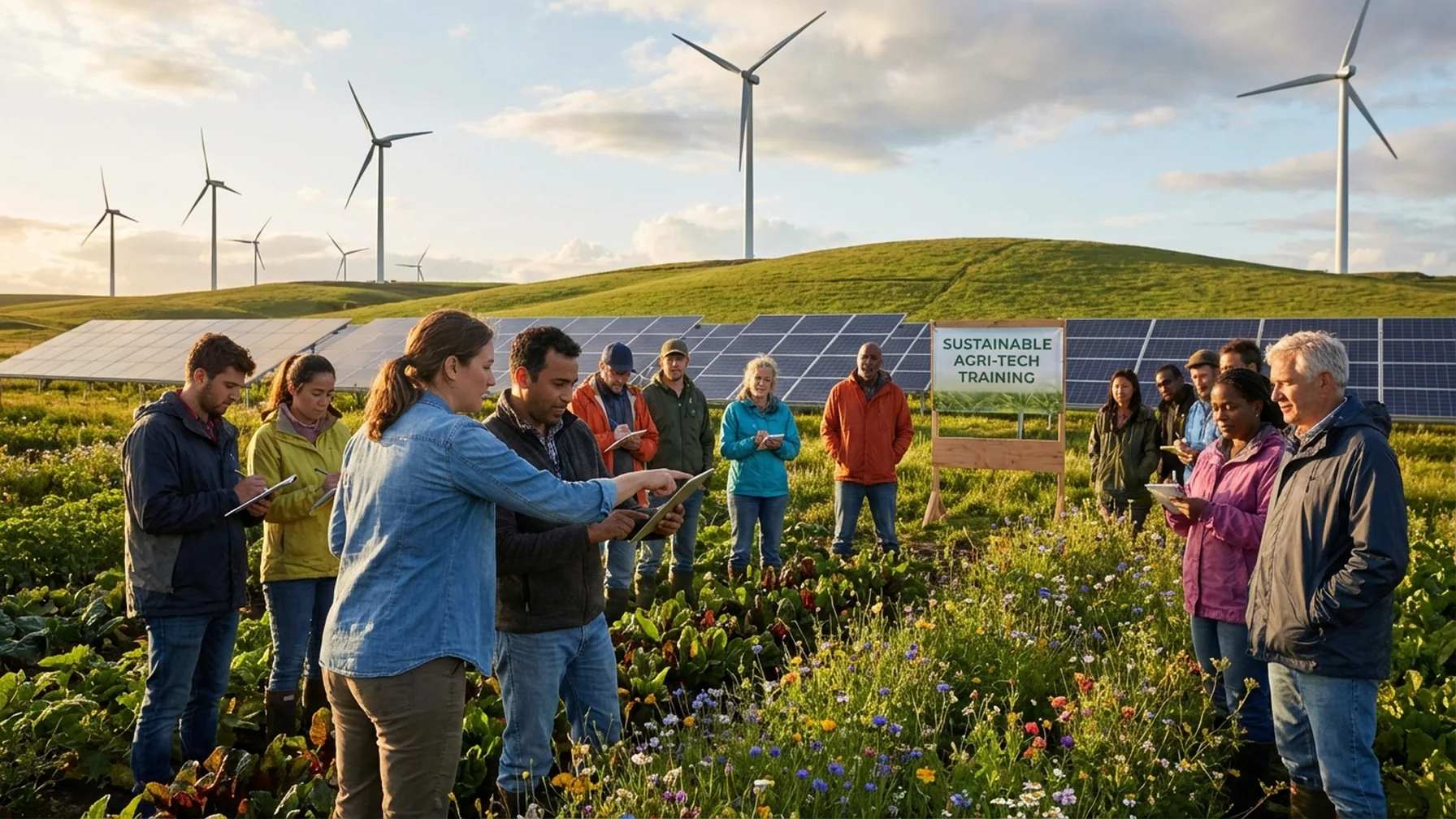
Web3 Solutions: Stunning Support for Sustainable Projects
How Web3 Can Support Environmental Projects
Environmental projects often hit the same roadblocks: slow funding, opaque reporting, and weak community engagement. Web3 tools—blockchains, smart contracts, and decentralised identifiers—can remove friction and build trust. Not by magic, but by redesigning how money flows, data is verified, and people coordinate.
Why blockchains suit climate action
Blockchains create shared ledgers that no single entity can quietly edit. That matters when a reforestation project claims 10,000 saplings planted or a coastal community reports mangrove survival rates. Transparent records reduce disputes and auditing costs, and smart contracts automate payouts only when evidence arrives.
A tiny scenario: a solar microgrid in a village logs kilowatt-hours on-chain. A smart contract releases monthly funds to operators when verified readings exceed a threshold, and tokenised credits are distributed to households that reduced peak usage.
Core Web3 building blocks for the environment
Several components repeat across credible green projects. Understanding them helps you pick tools that fit your context rather than chasing gimmicks.
- Smart contracts: automate grants, bounties, and outcome payments with conditions tied to data feeds.
- Oracles: bridge real-world data such as sensor outputs, satellite imagery scores, or certification updates.
- Tokenisation: represent carbon credits, biodiversity units, or energy as on-chain assets with traceable provenance.
- Decentralised identity (DID): give communities, auditors, and devices verifiable credentials to reduce fraud.
- Public-good funding: quadratic funding and retroactive public goods reward impact proven after the fact.
None of these replace fieldwork or science. They make proof and payments faster, cheaper, and harder to manipulate.
From ideas to action: practical use cases
Environmental projects vary widely, yet several patterns have emerged where Web3 adds clear value.
- Transparent grant disbursement: funds move in tranches when agreed metrics are met and verified via oracles.
- Digital MRV (measurement, reporting, verification): IoT devices and remote sensing feed tamper-resistant records.
- Tokenised impact assets: carbon, renewable energy certificates (RECs), and biodiversity credits become tradable with end-to-end provenance.
- Community co-ownership: locals receive tokens reflecting stewardship, giving them voting rights and revenue shares.
- Data commons: geospatial and ecological datasets are published under clear licences with on-chain attribution.
Picture a watershed restoration: citizen scientists upload water turbidity readings through a mobile app. Devices hold verifiable credentials; readings are signed and timestamped. The project’s smart contract unlocks maintenance funds when turbidity drops below a set value for 90 consecutive days.
Designing trustworthy tokenised credits
Tokenisation can improve liquidity and traceability, but only if credits rest on sound baselines and conservative assumptions. Flaky credits erode trust quickly.
| Element | What good looks like |
|---|---|
| Additionality | Project proves outcomes wouldn’t happen without its intervention and funding. |
| Permanence | Clear risk buffers, insurance, or reversal penalties for events like fires or pests. |
| Leakage control | Monitoring to ensure activity isn’t displaced to another area or sector. |
| MRV transparency | Public methodology, raw data access, and third-party audits recorded on-chain. |
| Retirement tracking | One-click, immutable retirement to avoid double counting across registries. |
If your token can’t pass this checklist, rethink the methodology before coding the contract. Software cannot paper over weak science.
Data integrity: oracles, sensors, and satellites
The biggest risk lies between the forest and the ledger. Oracles and cryptographic tools reduce that gap.
- Signed sensor data: devices with secure elements sign measurements; signatures are verified on-chain.
- Remote sensing: satellite-derived biomass or land-cover change feeds provide independent cross-checks.
- Zero-knowledge proofs: teams can prove a threshold was met (e.g., >30% canopy cover) without exposing precise coordinates of sensitive habitats.
- Multi-source consensus: payouts require two or more independent data providers to agree within a tolerance band.
A hybrid approach—local sampling plus remote sensing—usually beats either method alone. It balances accuracy, cost, and speed.
Funding models that reward outcomes
Traditional grants pay upfront; results arrive—maybe—months later. Web3 enables outcome financing at scale.
- Milestone escrows: donors deposit funds to a contract; release follows oracle-confirmed targets.
- Quadratic funding: matching pools amplify broad community support, not just wealthy backers.
- Retroactive rewards: evaluators pay for proven impact after independent review, encouraging experimentation.
For small NGOs, even simple escrow with public milestones boosts credibility and reduces admin time. Donors see progress in real time rather than waiting for a PDF report.
Governance that includes the people on the ground
Token-based governance can skew toward speculators. Good design keeps decision-making close to those doing the work.
- Two‑house voting: one chamber for local stewards, one for funders; major changes require both.
- Non-transferable reputation: credentials earned via verified contributions, not bought on exchanges.
- Geofenced participation: contributors near project sites hold extra weight on land-use proposals.
When locals have real power, projects gain durability. A mangrove DAO with fisherfolk holding veto rights is less likely to drift into cosmetic planting targets.
Interoperability with legacy systems
Most environmental work still runs on spreadsheets and established registries. Bridging matters more than replacing.
- APIs to recognised registries so token retirements mirror official records.
- Exportable CSVs and simple dashboards for auditors and government agencies.
- Legal wrappers—trusts, co-ops, or foundations—so on-chain rules map to enforceable off-chain obligations.
Interoperability lowers adoption risk. Field teams keep familiar workflows, while funders gain transparency and speed.
Risks and how to mitigate them
Web3 adds new failure modes. Clear controls keep projects on track.
- Speculation overheating credits: use vesting, price floors for buybacks, and clear utility beyond trading.
- Smart contract bugs: commission external audits, add upgrade paths with timelocks, and cap per-transaction exposure.
- Privacy concerns: aggregate sensitive field locations and use selective disclosure for data sharing.
- Energy footprint: choose energy‑efficient chains (proof‑of‑stake) and measure emissions from your own infrastructure.
Risk plans should live in the repository alongside code and protocols, not in a forgotten slide deck.
A phased path to launch
Start small, prove integrity, then scale. This sequence avoids overpromising and underdelivering.
- Define outcomes: choose 2–3 measurable indicators (e.g., canopy density, kWh generated, dissolved oxygen).
- Select data sources: pair local sampling with one independent remote feed; document methods openly.
- Build minimal contracts: escrow, milestone logic, and a simple registry for assets or retirements.
- Pilot with a single site: run for a full season; publish raw data and post-mortems.
- Iterate governance: test voting and dispute-resolution processes with real proposals.
- Scale cautiously: add sites and partners only once MRV and payouts operate smoothly.
A lean pilot that pays out correctly beats a flashy launch that later unravels under scrutiny.
What success looks like
Signs you’re on the right track: donors can verify impact without chasing PDFs, communities share decision rights and revenue, and credits retire cleanly with no double counting. Field teams spend more time on restoration than on paperwork. Auditors can reproduce results from accessible data.
Web3 doesn’t solve ecology. It solves coordination. When coordination is cleaner, good environmental work scales faster and withstands pressure longer.